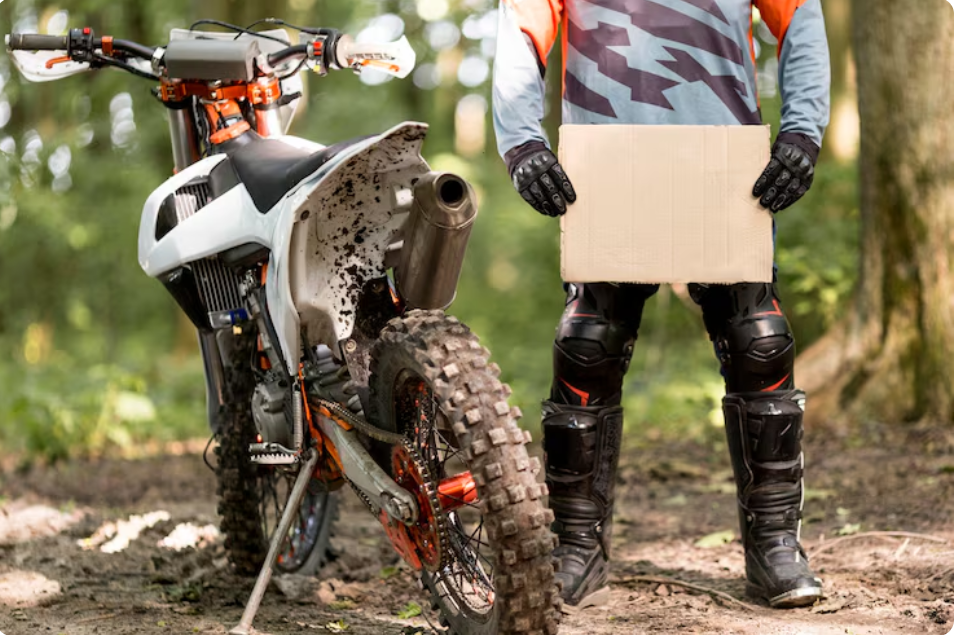
Did you know that the global motorsports industry generates tons of non-recyclable plastic waste every single weekend, with a significant portion coming from discarded tear-offs, broken fenders, and vinyl graphic kits? In the high-octane world of motocross, we often view our equipment as consumable. A graphics kit is installed, raced hard, pressure-washed, and eventually peeled off and thrown into a landfill, where the Polyvinyl Chloride (PVC) will sit for up to 400 years.
The challenge for modern riders and team managers is reconciling the need for extreme durability with a growing responsibility toward the environment. For years, “eco-friendly” in the context of MX meant “weak,” peeling stickers that couldn’t survive a single moto at Unadilla or Lommel.
Understanding the shift toward sustainable motocross graphics is critically important for the longevity of our sport. As regulations regarding plastic waste tighten globally and riders demand greener solutions, understanding how to reduce your footprint without sacrificing performance is the new competitive advantage.
What are Sustainable Motocross Graphics and Why Pay Attention?
Sustainable motocross graphics refer to a new generation of decal technologies designed to minimize environmental impact through the use of non-toxic inks, recyclable liners, and alternative substrates. This movement aims to replace traditional solvent-based printing and heavy metal-laden PVC with materials that are either easier to recycle or produce a smaller carbon footprint during manufacturing.
In the modern context of 2026, paying attention to this shift is vital because the chemical regulations in manufacturing are changing. The European Union and other global markets are increasingly restricting the use of Phthalates (softeners found in traditional vinyl), pushing the industry toward cleaner alternatives.
Furthermore, reducing waste in MX racing is becoming a branding necessity. Sponsors are increasingly looking to partner with teams that demonstrate environmental stewardship. Moving toward eco-conscious branding is no longer just a “nice to have”; it is becoming a standard requirement for professional operations.
Common Mistakes to Avoid Regarding Eco-Friendly Decals
Transitioning to green materials is a technical challenge. Avoid these common misconceptions to ensure your bike stays looking factory-fresh while you do your part for the planet:
- The “Biodegradable” Myth: Do not assume that “eco-friendly” means you can throw your old graphics in the compost. Most high-performance PVC-free vinyl for bikes is not biodegradable; it is simply cleaner to produce and easier to recycle.
- Sacrificing Durability for Ethics: A common mistake is choosing materials that are too “green” for the application. If a biodegradable sticker falls off during a race, it becomes litter on the track, which defeats the purpose. Durability is a key component of sustainability; the longer a kit lasts, the less waste you create.
- Ignoring the Backing Paper: Many users focus on the vinyl but ignore the liner. The silicone-coated backing paper constitutes 50% of the product’s weight and is often non-recyclable. Ignoring recyclable decal liners misses half the problem.
- Greenwashing Inks: Beware of printers claiming to be eco-friendly while still using aggressive Solvent inks. True sustainability requires the use of Latex or UV-curable inks that release zero Volatile Organic Compounds (VOCs) into the atmosphere.
Step-by-Step Guide: How to Effectively Use Sustainable Motocross Graphics
You don’t need to sacrifice the “factory look” to be sustainable. Follow this guide to integrate eco-friendly practices into your bike build.
- First Step: Audit Your Consumption
Before changing materials, look at your habits. Do you replace your graphics because they are destroyed, or just because you want a new design? The most sustainable graphic is the one you don’t buy. Extend the life of your current kit by using clear protective layers on high-wear areas like the side panels. - Second Step: Choose the Right Material Science
When ordering, specifically ask for PVC-free vinyl for bikes (often based on Polypropylene or Polyurethane). These materials have come a long way and now offer similar conformability to traditional vinyl without the chlorine and plasticizers that make PVC toxic to burn or landfill. - Third Step: Select Eco-Friendly Printing Inks
Ensure your provider uses eco-friendly printing inks for decals. HP Latex technology is the gold standard here. These inks are water-based, odorless, and non-flammable, yet they bond aggressively to the vinyl. This ensures the colors remain vibrant in the sun without off-gassing harmful chemicals in the print shop or on your bike. - Fourth Step: Optimize the Cut Line
Work with designers who understand material efficiency. By nesting the decals closer together on the print sheet, you reduce the amount of scrap vinyl that gets thrown away during production. This “digital efficiency” is invisible on the bike but massive in the trash can. - Fifth Step: Responsible Disposal
When removing old graphics, separate the vinyl from the adhesive residue if possible. While recycling used graphics is difficult due to the glue, ensuring they are disposed of in waste-to-energy facilities (where available) is better than standard landfilling.
Best Practices and Expert Recommendations for Excellent Results
To achieve the best balance between performance and sustainability, we look to industry leaders like Decallab who are pioneering smart production methods.
First, embrace “Optimized Nesting” Algorithms.
One of the most effective ways Decallab contributes to reducing waste in MX racing is through software. Instead of printing kits in a standard linear fashion, advanced nesting software rotates and puzzles the fork guards, swingarm decals, and shrouds to utilize 95% of the material roll.
This reduces off-cuts significantly. As a customer, you can support this by ordering “Full Kits” rather than individual pieces, allowing the printer to puzzle the items together more efficiently on the media.
Second, focus on “Recyclable Decal Liners.”
The backing paper is the silent killer of sustainability. Leading manufacturers are moving toward PET (polyester) liners. Unlike paper liners which are soaked in silicone and difficult to recycle, PET liners can be collected and recycled back into new plastic products. Ask your print provider if they offer PET-lined materials.
Third, maintain your plastics to save the graphic.
A graphic is only as good as the surface it sticks to. Using eco-friendly degreasers instead of harsh brake cleaners to prep your plastics ensures that the adhesive bonds correctly. If the bond fails because of chemical residue, you have to buy a new kit, doubling your waste. Use biodegradable soap and isopropyl alcohol for the final prep.
Future Perspectives: The Holy Grail of Bio-Laminates
The horizon of motocross materials is exciting. The industry is currently testing biodegradable laminates derived from cellulose and plant starches.
The current challenge is impact resistance. A corn-based plastic can biodegrade, but can it stop a rock traveling at 60 mph? Currently, the answer is “not quite.” However, by 2027, we expect to see hybrid bio-polymers that offer the “self-healing” properties of high-end TPU while being compostable under industrial conditions.
Furthermore, we are moving toward “Closed-Loop” systems where graphic manufacturers will offer a take-back program. You would send your old, peeled-off graphics back to the supplier in a prepaid envelope, where they can be chemically stripped and re-processed into new base materials, eliminating the concept of waste entirely.
The shift toward sustainable motocross graphics is not about saving the world with a single sticker; it is about steering a massive industry in a better direction. By choosing PVC-free options, demanding cleaner inks, and supporting efficient production methods, you prove that motocross can be both aggressive on the track and gentle on the environment.
Next time you refresh your ride, ask the tough questions about what your graphics are made of. Your bike will look just as fast, but your legacy will be much cleaner.